

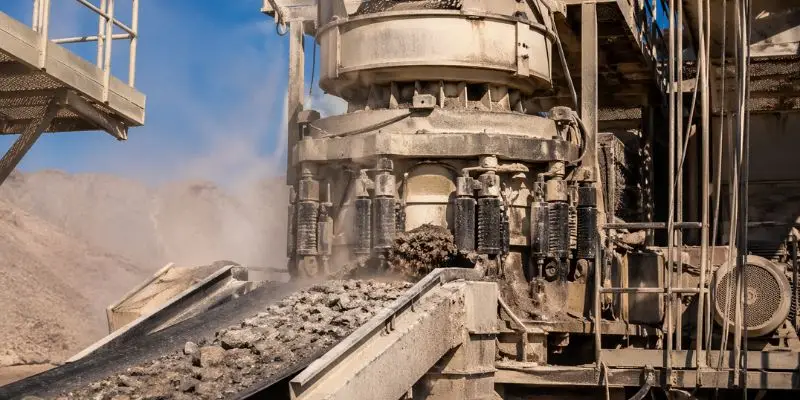
Harsh mining conditions don’t just wear parts out faster. They expose every weakness in a part’s design that average conditions would never reveal. The difference between a part that was engineered for demanding environments and one that wasn’t becomes very clear, very quickly.
Custom crusher parts for mining exist because the range of conditions cone crushers operate in is far wider than any single standard specification can cover effectively. When your ore is exceptionally hard, your feed is highly variable, your site is remote, or your production targets leave no room for performance degradation, the engineering behind your crusher parts needs to account for those specific realities rather than approximate them.
What Makes a Mining Environment Harsh From a Crusher Parts Perspective
Harshness in mining environments isn’t a single variable. It’s a combination of factors that interact with each other in ways that compound the demands on crusher parts significantly. Understanding which factors are present at your site and how they interact is the starting point for understanding what your parts actually need to be engineered to handle.
Ore hardness and abrasivity are the most direct variables. High silica content, massive sulfide deposits, and iron ore bodies all create aggressive abrasive wear that standard alloy specifications weren’t optimized for. When ore abrasivity is at the high end of the spectrum, liner wear rates can be two to three times what the same liner would experience in a moderate application, and the alloy that performs adequately in the moderate application may perform very poorly in the harsh one.
Feed variability is the second major factor. Mining operations that process ore from multiple zones with significantly different hardness and mineralogy create highly variable crushing conditions. A liner and operating setup optimized for one zone may be significantly mismatched when the next zone’s ore enters the circuit. That variability creates a pattern of alternating over-stress and under-utilization that accelerates wear unevenly and makes performance difficult to predict or manage with a static parts specification.
Environmental conditions compound both of those factors. Extreme temperatures, high altitude, limited cooling capacity, and remote site logistics all add layers of operational complexity that affect how crusher parts perform and how quickly problems can be identified and addressed.
How Standard Parts Fail in Demanding Conditions
Standard cone crusher parts fail in harsh environments in predictable ways, and understanding those failure modes makes it easier to evaluate whether a custom-engineered alternative would address them.
The most common failure mode is accelerated wear that concentrates in specific zones rather than distributing evenly across the liner surface. Standard alloy specifications are formulated for moderate abrasivity. In high-abrasivity conditions, they wear faster than expected and often develop localized wear concentration because the profile geometry wasn’t designed for the specific feed characteristics the harsh environment is delivering.
The second common failure mode is brittleness under high-impact loading. Some high-hardness alloys that perform well under steady abrasive wear conditions become brittle when subjected to the impact loading that variable or coarse feed creates. A part that was selected for its hardness without accounting for the impact characteristics of the ore can fail in ways that look nothing like normal wear, fracturing under loads that a tougher alloy would absorb.
The third failure mode is geometric mismatch under extreme conditions. A liner profile that performs adequately in moderate conditions may create significant chamber loading problems when ore hardness increases substantially. Higher hardness ore requires more force to break at the same feed size, which changes the load distribution in the chamber and can create overload conditions that a profile optimized for softer ore wasn’t designed to manage.
What Custom Crusher Parts for Mining Are Actually Engineered to Handle
Genuine custom crusher parts for mining are engineered around the specific combination of variables present at your site rather than around the midpoint of a broad application range. That engineering addresses the failure modes described above at the design stage rather than discovering them in service.
For high-abrasivity environments, alloy selection is optimized for the specific wear mechanism your ore creates. That means characterizing your ore’s abrasivity properly and selecting an alloy whose hardness and toughness are balanced for that specific abrasivity rather than for average conditions. In practice, this often means a different alloy than the OEM spec and sometimes a different alloy than what a generic “hard ore” recommendation would suggest.
For high-variability feed conditions, liner profile design accounts for the range of conditions the crusher will encounter rather than optimizing for a single point in that range. A profile that handles the hardest zone your ore body produces without creating problems when softer material enters the circuit requires a more nuanced design approach than a single-condition optimization.
For remote and extreme environmental conditions, parts design accounts for the extended intervals between support visits and the limited ability to make rapid adjustments when conditions change. That means engineering toward robustness and predictability rather than peak performance under ideal conditions, because ideal conditions are rarely what remote harsh-environment operations actually experience.
How High Performance Crusher Liners Are Designed for Extreme Conditions
High performance crusher liners for harsh mining environments are the product of an engineering process that starts with site characterization rather than catalog selection. The process covers ore hardness and abrasivity testing, feed gradation analysis across the range of ore zones the crusher processes, wear pattern history from previous liner removals, and an assessment of the environmental and logistical factors that affect how the crusher is operated and maintained.
From that characterization, the liner profile geometry is developed to handle the specific feed gradation and reduction ratio requirements of the site across its range of operating conditions rather than at a single design point. The alloy specification is developed to match the wear mechanism profile of the ore, balancing hardness against toughness in a way that prevents both accelerated abrasive wear and brittle fracture under impact loading.
The result is a liner that’s genuinely built for your environment rather than one that’s been selected as the closest available standard option. High performance crusher liners engineered this way consistently outperform standard specs in harsh conditions because they’re addressing the specific engineering challenges those conditions create rather than approximating a solution that was developed for easier ones.
Expert Insight: Why Harsh Environments Expose Engineering Gaps That Normal Conditions Hide
Here’s a perspective that experienced crusher engineers recognize immediately: standard parts don’t fail in harsh environments because they’re bad parts. They fail because the engineering assumptions behind them don’t hold at the extremes.
A liner alloy that’s formulated for moderate abrasivity performs exactly as designed in moderate abrasivity. Put it in a high-silica, high-hardness ore body and the same alloy is being asked to perform under conditions that were outside its design envelope from the first day it went into service. The failure isn’t a quality problem. It’s an application mismatch problem, and that distinction matters because it changes what the solution is.
Harsh mining conditions are valuable precisely because of this. They make the engineering gap between a genuinely site-specific part and a general-purpose one impossible to ignore. Sites with moderate conditions can run standard parts and see acceptable results because the mismatch between standard engineering assumptions and actual conditions is small enough not to matter much. Harsh conditions make that mismatch impossible to overlook, which is why the sites with the most demanding operating environments are also often the ones most motivated to invest in genuine engineering work on their crusher parts.
Custom crusher parts for mining in harsh environments aren’t just a performance upgrade. They’re the engineering response to conditions that standard parts were never designed to handle, and the performance difference reflects exactly that gap.
Evaluating Whether a Supplier Is Genuinely Equipped for Your Environment
A supplier claiming to offer custom crusher parts for harsh mining conditions should be able to demonstrate genuine engineering capability specific to your environment. Four questions are worth asking directly before committing:
Can they characterize your ore’s abrasivity and impact properties specifically and explain how that characterization informed their alloy recommendation? A supplier who recommends a “hard ore alloy” without ore-specific characterization isn’t doing genuine engineering work.
Can they show documented performance data from comparable harsh-environment sites with similar ore characteristics and operating conditions? General testimonials don’t substitute for performance data from sites with comparable demands.
Do their engineers understand how profile geometry interacts with high-variability feed conditions? A supplier who only addresses alloy selection without discussing profile optimization for variable feed hasn’t fully engaged with the engineering challenge harsh conditions create.
Can they support your site on a schedule that accounts for its remote location and limited access windows? Engineering capability that can’t be delivered to your site under your logistical constraints isn’t fully useful regardless of its quality.
If your current crusher parts are consistently underperforming in your operating environment and you’re not getting engineering engagement that addresses your specific conditions, Optimum Crush’s team has extensive experience developing high performance crusher liners and custom crusher parts for mining operations in some of the most demanding environments in the industry. Reach out and let’s talk about what your environment actually requires.
FAQ
How do I know if my mining environment qualifies as harsh from a crusher parts engineering perspective?
If your ore hardness or abrasivity is at the high end of the spectrum for your commodity type, if your feed gradation varies significantly as the mine moves through different geological zones, if your site is remote enough that parts lead times and support access are constrained, or if your current standard parts are consistently underperforming against OEM life estimates, your environment is creating engineering challenges that standard parts weren’t designed to handle. Any one of those factors warrants a conversation about custom engineering. Multiple factors together make it a near-certainty that a site-specific approach would deliver meaningful improvement.
What’s the difference between a hard alloy liner and a genuinely custom engineered liner for harsh conditions?
A hard alloy liner substitutes a higher-hardness material for the standard alloy without changing the profile geometry or engineering the alloy selection to your specific ore characteristics. It addresses one variable, abrasive wear resistance, while leaving the others unchanged. A genuinely custom engineered liner for harsh conditions addresses alloy selection relative to your ore’s specific wear mechanism profile, profile geometry relative to your feed gradation and variability, and the interaction between those two variables under your specific operating conditions. The performance difference between the two approaches is most visible in harsh environments where the partial solution a hard alloy liner provides quickly reaches its limits.
Can high performance crusher liners reduce the frequency of liner changes at remote mine sites?
Yes, and this is one of the most financially significant benefits at remote operations where each liner change involves significant logistical complexity. High performance crusher liners engineered for your specific ore and operating conditions consistently deliver longer wear life than standard specs in harsh environments, because they’re addressing the wear mechanisms actually present at your site rather than average wear conditions. At remote sites where the logistical cost of a liner change includes parts transportation, additional labor mobilization, and extended downtime relative to accessible sites, even a moderate improvement in liner life creates substantial total cost savings.
How does feed variability affect crusher parts performance in harsh mining environments?
Feed variability creates alternating stress conditions in the crushing chamber that a liner optimized for a single ore type handles poorly. When hard ore zones alternate with softer zones, a liner profile optimized for the hard ore creates overload conditions when extremely hard material enters the circuit and underutilizes the crusher when softer material comes through. A liner designed for the full range of conditions the crusher will process maintains more consistent performance across the variability and experiences more even wear distribution, both of which extend effective liner life and improve throughput consistency.
 English
  Spanish
  French