


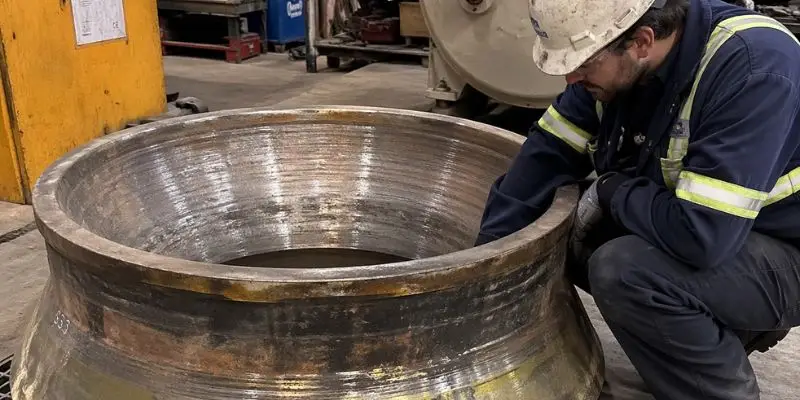
Every cone crusher liner tells a story when it comes off the machine. Most teams glance at it, confirm it’s worn out, and move on. The ones getting the most out of their equipment actually read it.
Crusher liner wear analysis is one of the highest-value diagnostic tools available to a mine maintenance team. It doesn’t require any additional equipment or budget. The information is sitting right there at every liner change. The difference between teams that use it and teams that don’t is knowing what the patterns mean and what to do with them.
Why Wear Patterns Are a Diagnostic Tool, Not Just a Maintenance Metric
Most teams treat liner wear as a consumption metric. How long did it last? Was it within budget? Those are reasonable questions, but they’re only half the picture.
Wear patterns reveal how the crusher was actually loading material throughout the liner’s life. They show:
- whether the chamber was choke-fed consistently
- whether the feed distribution was even
- whether the CSS was managed correctly
- whether the liner profile was matched to the feed gradation.
A wear pattern that looks unusual isn’t just a data point. It’s a symptom with a cause, and that cause is usually still present and still affecting your next liner.
That’s the core value of crusher liner wear analysis: it gives you the information you need to make the next run better before you commit to it. Learn more about warning signs that your chamber design is hurting performance.
The Four Most Common Wear Patterns and What They Mean
-
Even Wear From Top to Bottom
This is what you’re aiming for. Consistent wear across the full height of the mantle and bowl liner means the chamber is loading material evenly, feed distribution is good, and the liner profile is reasonably well matched to your feed. If you’re seeing this pattern consistently, your focus should be on optimizing alloy selection and liner intervals rather than redesigning the profile.
-
Heavy Wear Concentrated in the Lower Chamber
This pattern typically indicates that the crusher is running fine-dominated feed through a chamber profile designed for coarser material. The lower chamber takes the bulk of the load because the material is already fine enough to bypass effective compression in the upper zone. A profile adjustment toward a finer feed configuration usually addresses this directly.
-
Heavy Wear Concentrated in the Upper Chamber
The opposite problem. Coarser material than the liner was designed for is causing the upper chamber to work harder than intended. This pattern is also associated with insufficient reduction ratio for the feed size entering the crusher. It’s worth reviewing feed gradation records alongside this pattern to confirm the root cause before making a profile change.
-
Uneven Wear Across the Circumference
Wear that’s heavier on one side of the liner than the other almost always points to a feed distribution problem rather than a liner design issue. Segregated feed, an off-center feed arrangement, or inconsistent material delivery to the crusher creates uneven loading around the circumference of the chamber. This pattern won’t be solved by a liner change alone. The feed system needs attention first.
How Wear Analysis Connects to Broader Cone Crusher Troubleshooting
Crusher liner wear analysis doesn’t exist in isolation. It’s one input in a broader cone crusher troubleshooting process, and it becomes significantly more useful when combined with other operational data.
Power draw history tells you how hard the crusher was working during the liner’s life. CSS records tell you whether the gap was managed correctly as the liner wore. Feed gradation records tell you whether the material entering the crusher matched what the liner was designed for. When wear pattern data is layered on top of those inputs, the diagnostic picture gets much clearer and the corrective action becomes much more specific.
Teams that build this habit, combining wear measurement at every liner pull with operational data review, develop a compounding advantage over time. Each liner cycle produces better information, which drives better decisions, which produces better results on the next cycle.
The Wear Pattern Most Teams Overlook Until It’s Too Late
There’s a wear pattern that doesn’t get enough attention in standard maintenance guidance: accelerated wear in a narrow band at mid-liner height, while the upper and lower zones look relatively normal.
This pattern often indicates that the crusher is operating at a CSS that’s creating a choke point at a specific location in the chamber rather than distributing compression progressively through the full liner height. It’s a geometry problem as much as a wear problem, and it typically gets worse as the liner ages because the narrow wear band deepens faster than the rest of the surface.
Why You Might Miss It
The reason teams miss it is that total wear volume can still look acceptable even when the pattern is problematic. The liner doesn’t fail prematurely in the obvious sense. It just delivers suboptimal throughput and product size for most of its life, and nobody connects it back to that mid-liner wear concentration.
This is exactly the kind of finding that crusher liner wear analysis is designed to surface. But only if teams are measuring wear at multiple points across the liner height rather than just checking the obvious high-wear zones.
How to Turn Wear Data Into Better Liner Decisions
Getting value from wear analysis requires a simple but consistent process:
- Measure wear depth at four to six points across the liner height at every change, not just at the obvious wear zones
- Record the measurements alongside the liner’s operational history: total tons crushed, average power draw, CSS range, and any notable feed condition changes
- Compare the pattern against your last two or three liner pulls to identify whether it’s consistent or changing
- Bring that data to your liner supplier or engineering partner before committing to the next liner spec
That last step is where crusher liner wear analysis turns into crusher liner improvement. The data only creates value when someone with the right engineering context looks at it and connects it to a decision.
If your wear patterns are telling you something but you’re not sure what, Optimum Crush’s engineering team works through this kind of analysis regularly. Reach out and let’s look at what your liners have been trying to tell you.
FAQ
What does uneven cone crusher liner wear indicate? Uneven wear across the circumference of a liner almost always points to a feed distribution problem. Segregated feed, an off-center feed arrangement, or inconsistent material delivery creates uneven loading around the chamber. Uneven wear concentrated in the upper or lower chamber zones typically indicates a mismatch between the liner profile and the feed gradation entering the crusher.
How do I perform a basic crusher liner wear analysis? Start by measuring wear depth at four to six evenly spaced points across the full height of the mantle and bowl liner when you pull it. Record those measurements alongside your operational data for that liner cycle: total tons crushed, CSS range, average power draw, and any significant feed condition changes. Comparing that data across multiple liner cycles builds a wear profile that reveals patterns and informs better liner selection decisions going forward.
Can wear patterns predict when a liner needs to be changed? Yes, with some consistency. Once you’ve tracked wear measurements across several liner cycles, you can build a wear rate curve that shows how quickly different zones of the liner are consuming. That curve lets you project when the liner will reach its minimum thickness or when throughput will start dropping off, which allows you to schedule changes proactively rather than reactively.
What’s the connection between crusher liner wear analysis and cone crusher troubleshooting? Wear analysis is one of the most reliable inputs in cone crusher troubleshooting because it reflects the actual operating history of the machine in a way that real-time sensors often can’t capture. Unusual wear patterns frequently surface problems with feed conditions, CSS management, or chamber geometry that weren’t obvious during normal operation. When combined with power draw history and feed gradation records, wear data helps narrow down root causes significantly faster than troubleshooting from symptoms alone.
 English
  Spanish
  French