
There’s a version of aftermarket cone crusher parts that’s essentially a cheaper copy. There’s another version that’s a genuine engineering improvement. Knowing the difference is one of the more valuable skills a mine maintenance team can develop, and it starts with understanding what genuine engineering work actually looks like in this space.
This article isn’t a defense of the aftermarket category. It’s a practical guide to the specific situations where aftermarket cone crusher parts deliver better outcomes than OEM, and why the engineering behind the part is the variable that determines which version you’re getting.
Why “Aftermarket” Covers a Much Wider Range Than Most Teams Realize
The word “aftermarket” gets applied to two very different types of suppliers, and treating them as the same category is where a lot of teams get into trouble.
The first type is a parts reseller. They source castings, often reverse-engineered from OEM dimensions, and sell them at a lower price point. There’s no meaningful engineering work happening. The part is designed to be dimensionally compatible with the OEM component, nothing more. Quality varies significantly depending on the foundry relationship and the materials spec being used.
The second type is a genuine engineering partner. Their cone crusher parts are designed or redesigned by engineers who understand how the full machine system works, where the OEM design has room for improvement, and how your specific application should inform the part specification. The result is a part that isn’t just compatible with your machine. It’s optimized for it.
The distinction matters because the performance outcomes are completely different. Evaluating aftermarket cone crusher parts without understanding which type of supplier you’re dealing with is like evaluating two job candidates without reading their qualifications.
Four Situations Where Aftermarket Cone Crusher Parts Outperform OEM
- When Your Feed Conditions Don’t Match the OEM’s Design Assumptions OEM cone crusher parts are engineered for a range of applications, not your specific one. When your ore hardness, feed gradation, or moisture content sits outside the middle of that range, the OEM spec is working against you. An engineered aftermarket part designed around your actual feed conditions will consistently outperform a standard OEM spec in those situations.
- When OEM Liner Life Is Consistently Falling Short If you’re not hitting expected liner intervals despite correct operating parameters, the OEM liner profile or alloy may simply not be well matched to your ore. A site-specific engineering review followed by a custom liner design frequently recovers significant liner life in these situations, and the gains are documented and repeatable rather than accidental.
- When the OEM Design Has a Known Weakness Some cone crusher parts have design characteristics that create predictable failure modes under certain operating conditions. Engineers who’ve worked inside OEM design teams know where those weaknesses are and how to address them in an aftermarket design. In those cases, a well-engineered aftermarket alternative isn’t just competitive with the OEM part. It’s genuinely better.
- When You Need Engineering Support the OEM Can’t Provide OEM support for aftermarket parts questions is often limited, slow, or routed through a distributor who doesn’t have direct engineering access. When a mine team needs fast, specific engineering guidance on a crusher problem, a dedicated aftermarket engineering partner who knows their machine is frequently more responsive and more useful than going back to the OEM.
The Engineering Difference That Actually Matters
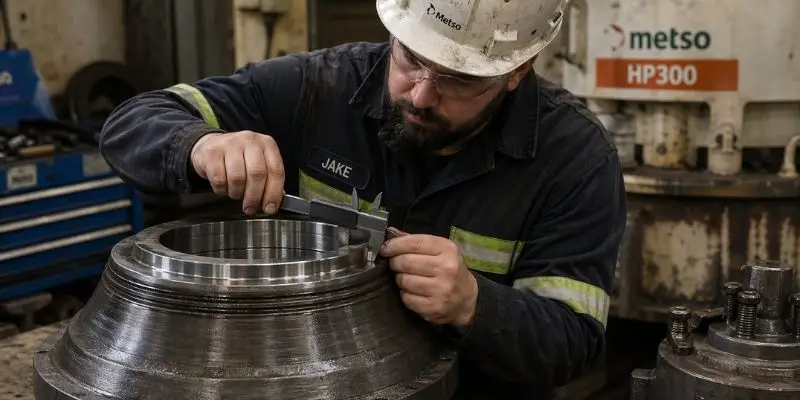
The variable that separates high-performing aftermarket cone crusher parts from copies is whether the supplier’s engineers understand how the part functions within the full cone crusher system, not just whether it fits in the right space.
A liner engineer who only knows liner geometry can make a part that fits. An engineer who understands how feed material moves through the crushing chamber, how liner wear affects CSS over time, and how alloy selection interacts with specific ore characteristics can make a part that performs. That systems-level knowledge is what makes the difference between a part that matches OEM performance and one that exceeds it.
It’s also what makes the on-site and troubleshooting support genuinely useful rather than generic. When your engineering partner understands the full machine, their guidance on a crusher problem is specific and actionable, not templated.
Why Price Is the Wrong Place to Start the Aftermarket Conversation
The most common mistake mining teams make when evaluating aftermarket cone crusher parts is leading with price. Price matters, but it’s the last variable that should drive the decision, not the first.
A set of aftermarket liners that costs 15 percent less than OEM but delivers 20 percent shorter liner life has a negative ROI before you account for the additional downtime from more frequent changes. Conversely, a set that costs 10 percent more but runs 40 percent longer and improves throughput by 15 percent is an easy financial win that looks expensive on the invoice.
The right starting point is performance: what do you need the part to do, what does your current part actually do, and what would a better-engineered alternative realistically deliver? Price fits into that conversation once the performance picture is clear. Teams that start with price and work backwards tend to end up with the copy version of aftermarket. Teams that start with performance and work forward tend to end up with the engineering version.
How to Evaluate an Aftermarket Supplier Before You Commit
Before switching any cone crusher parts to an aftermarket source, four questions are worth asking directly:
- Can you explain the engineering rationale behind this part’s design for my specific application?
- Do you have documented performance data from comparable sites running similar ore and operating conditions?
- Do your engineers have experience with the full cone crusher system, not just the component I’m sourcing?
- Can you provide on-site support if something needs to be evaluated in the field?
A supplier who answers those questions with specific, credible detail is doing genuine engineering work. One who deflects to price, lead time, or vague quality claims probably isn’t.
Aftermarket cone crusher parts from the right supplier aren’t a compromise. They’re a performance decision, and the data from mines that have made the switch with a genuinely engineering-led partner consistently backs that up. If you’re evaluating whether aftermarket makes sense for your operation, Optimum Crush’s team is happy to walk through the specifics with you. Reach out and let’s start with your performance data.
FAQ
How do I know if an aftermarket cone crusher part is genuinely engineered or just a copy? Ask the supplier to walk you through the engineering rationale behind their design for your specific application. A genuine engineering partner can explain how the part’s profile, alloy selection, and dimensional specifications were determined based on your feed conditions, ore characteristics, and performance targets. A parts reseller typically can’t answer those questions in specific terms and will default to generic quality claims or price comparisons instead.
Can aftermarket cone crusher parts damage my machine? A well-engineered aftermarket part from a supplier with proper dimensional controls and quality processes won’t damage your machine. A poorly made copy with inadequate dimensional accuracy or substandard materials can cause problems, which is why supplier evaluation matters so much. Asking for dimensional inspection reports and material certifications before your first order is a reasonable step with any new aftermarket supplier.
What’s the typical cost difference between OEM and aftermarket cone crusher parts? It varies by component and supplier, but aftermarket cone crusher parts from engineering-led suppliers are typically priced competitively with OEM, sometimes lower and sometimes comparable, depending on the complexity of the engineering work involved. The more relevant metric is cost per ton crushed over the liner’s life rather than invoice price, since a part that lasts significantly longer at a similar price point is meaningfully cheaper in practice.
Do aftermarket cone crusher parts come with a warranty? Most reputable aftermarket suppliers offer a warranty on their parts, though the terms vary. More meaningful than the warranty duration is the supplier’s track record and their willingness to stand behind their parts when a performance issue arises. A supplier with a documented warranty rate well below the OEM industry average is demonstrating real quality confidence, which matters more than warranty language on paper.
 English
  Spanish
  French