

Most mine sites don’t need a full-time crusher engineer on staff. They need a crusher engineer available when it counts, and that’s a very different staffing problem with a very different solution.
Fractional crusher engineering is that solution. It gives mining operations access to experienced cone crusher engineering expertise on a flexible basis, without the overhead of a full-time hire and without the limitations of going back to the OEM every time a technical question needs a real answer. For lean mine teams managing high-value equipment under serious production pressure, that access changes what’s possible.
The Engineering Gap Most Lean Mine Teams Are Working Around
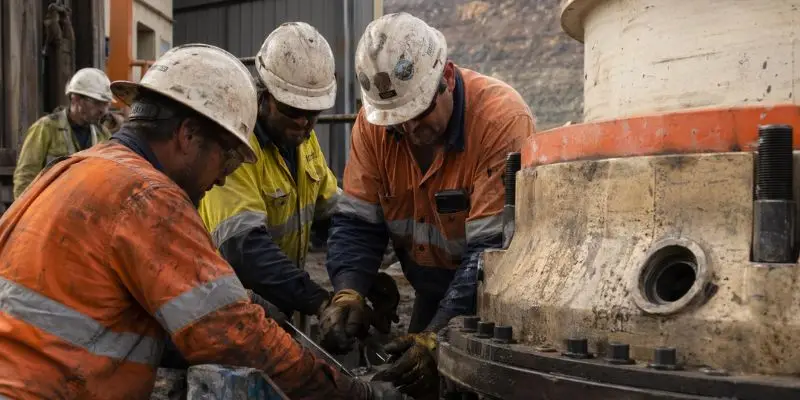
Large mining operations run complex, high-horsepower cone crushers that represent significant capital investment and even more significant production dependency. When something goes wrong, or when performance starts drifting without an obvious cause, the engineering knowledge required to diagnose and fix it correctly is specialized and not always available in-house.
Most maintenance teams handle this gap one of three ways. They rely on their OEM relationship, which is often slow, expensive, and filtered through a distributor without direct engineering access. They bring in a consultant, which is episodic and rarely results in the kind of ongoing institutional knowledge that prevents the same problem from recurring. Or they figure it out themselves, which works until it doesn’t and the cost of the miss is measured in production hours.
Fractional crusher engineering replaces all three of those workarounds with something more direct: a dedicated engineering relationship with a team that knows cone crusher systems deeply and is available to apply that knowledge to your specific equipment, your specific site, and your specific problems on an ongoing basis.
What Fractional Crusher Engineering Actually Means in Practice
The “fractional” model means you’re accessing a share of an engineering team’s time and expertise rather than employing that expertise full time. In practice, it looks like this:
Your site has a dedicated point of contact who knows your crusher configuration, your operating conditions, your liner history, and your production targets. When a question comes up, whether it’s a wear pattern that doesn’t look right, a throughput gap that needs diagnosing, or a liner change decision that needs engineering input, that contact is reachable directly and can provide specific, informed guidance rather than generic advice.
Beyond reactive support, fractional cone crusher engineering support also includes proactive engagement: liner performance reviews before change decisions are made, wear data analysis between shutdown windows, operating parameter recommendations as conditions change, and engineering input on parts decisions before they’re committed to. That proactive layer is where the real value accumulates over time.
The Four Situations Where It Delivers the Most Value
- Diagnosing Persistent Performance Issues When throughput is below target, wear life is shorter than expected, or the crusher is behaving in ways the maintenance team can’t fully explain, having an engineer who knows the full cone crusher system available to work through the data systematically is significantly faster and more reliable than trial and error. Fractional crusher engineering turns a diagnostic process that might take weeks into one that takes days.
- Making Liner Change Decisions With Confidence Liner selection is an engineering decision that most sites make based on habit, OEM recommendation, or supplier suggestion rather than site-specific data analysis. An engineering partner who reviews your wear data, feed conditions, and production history before every liner change ensures that decision is driven by the right information every time.
- Planning and Supporting Scheduled Shutdowns Shutdown windows are high-stakes and time-limited. Having engineering support available to prioritize maintenance items, review inspection findings in real time, and make informed decisions under time pressure reduces the risk of missing something important or committing to the wrong repair approach.
- Building Institutional Knowledge Over Time One of the most undervalued aspects of a fractional engineering relationship is the institutional knowledge that accumulates on both sides. An engineering partner who’s been working with your site for two years knows things about your crusher, your ore, and your operating patterns that an episodic consultant never will. That knowledge makes every subsequent engagement faster, more specific, and more valuable.
How It Differs From OEM Support and Full-Time Engineering Hires
OEM support is designed around the manufacturer’s product liability and warranty framework, not around your operational goals. It’s reactive by nature, often slow to mobilize, and filtered through commercial relationships that don’t always prioritize the fastest or most direct answer. It’s also generally not available for the kind of ongoing, proactive engagement that fractional crusher engineering provides.
A full-time engineering hire solves the availability problem but creates a different set of challenges. Specialized cone crusher engineering expertise is rare and expensive. A full-time hire at a single site may not have enough varied exposure to stay sharp across the full range of problems that come up over time. And the overhead of a full-time technical role is difficult to justify for sites that need intensive engineering support during some periods and minimal support during others.
Fractional crusher engineering sits between those two options. It’s more responsive and more operationally focused than OEM support, and more cost-effective and flexible than a full-time hire. For most lean mine teams, it’s the model that actually fits how engineering support gets used in practice.
Why the Best Use of Fractional Engineering Isn’t Emergency Response
Here’s a perspective that doesn’t come up often enough in conversations about engineering support: the highest value application of fractional crusher engineering isn’t fixing problems after they happen. It’s preventing the conditions that create them.
Most mine teams think of engineering support as something they need when something goes wrong. That’s understandable, because that’s when the need is most visible. But an engineering partner who’s engaged proactively, reviewing liner wear data between changes, checking operating parameters against feed condition changes, and flagging developing issues before they become failures, prevents far more cost than they resolve after the fact.
The economics of prevention versus response in cone crusher operations are significant. An unplanned shutdown costs multiples of what a proactive engineering review costs. A liner change that could have been extended two weeks with a CSS adjustment represents real production value that a reactive-only engagement model never captures.
The mine teams getting the most from fractional cone crusher engineering support aren’t calling their engineering partner when the crusher stops. They’re talking to them regularly when it’s running, and that’s exactly why it stops less often.
Getting the Right Engineering Support for Your Operation
Fractional crusher engineering works best when it’s treated as an ongoing partnership rather than an on-call service. The engineering relationship that develops over time, built on knowledge of your specific equipment, your ore, and your operational patterns, is what makes the support genuinely valuable rather than just technically competent.
If your team is currently working around an engineering gap with OEM calls, episodic consultants, or internal trial and error, fractional crusher engineering is worth a serious look. Optimum Crush’s fractional engineering model is built around exactly this kind of dedicated, proactive partnership. Reach out and let’s talk about what that could look like for your operation.
FAQ
What’s the difference between fractional crusher engineering and a standard aftermarket parts supplier? A standard aftermarket supplier provides parts and basic technical support tied to those parts. Fractional crusher engineering provides dedicated access to experienced cone crusher engineers who work with your site on an ongoing basis, covering everything from liner selection and wear analysis to shutdown planning, troubleshooting, and operating parameter optimization. The relationship is broader, more proactive, and not limited to the parts transaction.
How do I know if my operation needs fractional crusher engineering support? If your maintenance team is regularly making liner, operating parameter, or repair decisions without engineering input and relying on OEM guidance that’s slow or generic, fractional crusher engineering is likely worth evaluating. It’s particularly valuable for operations running high-horsepower cone crushers where the cost of a suboptimal decision is high and the engineering knowledge required to make a good one is specialized.
Can fractional crusher engineering support be provided remotely or does it require on-site visits? Both. Most ongoing fractional cone crusher engineering support is delivered remotely through regular data reviews, direct communication, and engineering input on decisions as they come up. On-site visits are typically reserved for liner change events, shutdown support, troubleshooting situations that require physical inspection, or periodic performance reviews. The right balance depends on the operation and the nature of the support needed.
How is fractional crusher engineering priced compared to hiring a full-time engineer? Fractional crusher engineering is significantly more cost-effective than a full-time engineering hire for most operations, because you’re accessing specialized expertise on a flexible basis rather than paying for full-time availability you may not always need. The specific structure varies by engagement, but the model is designed to provide high-value engineering access at a fraction of the cost of dedicated in-house technical staff.
 English
  Spanish
  French