
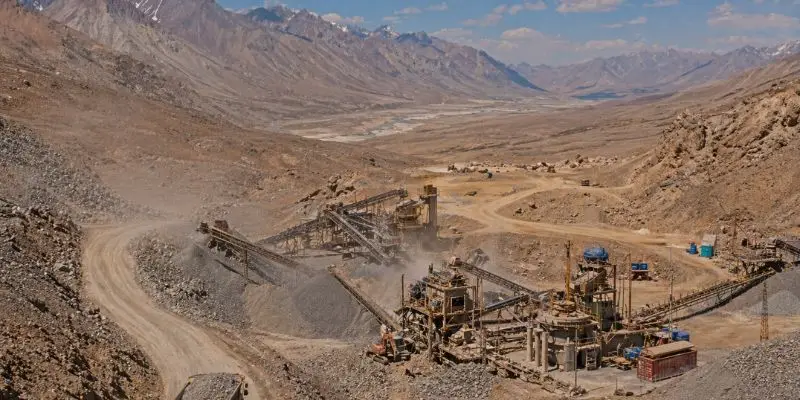
Remote mining operations can’t afford to find out a liner wasn’t right for their conditions three weeks into a production run. By then the cost of the mismatch has already been paid in wear rate, throughput loss, and a parts order that needs to travel a long way to get there.
Site specific liner analysis is the tool that prevents that scenario. It replaces the assumption that a standard liner spec will work for your site with a data-driven process that matches liner design to your actual operating conditions before the liner goes into the machine. For remote mining operations where the logistical and production consequences of a poor liner decision are amplified by distance and limited support access, that process isn’t a luxury. It’s a fundamental part of managing crushing circuit performance effectively.
Why Standard Liner Selection Falls Short at Remote Mine Sites
Standard liner selection is built around averages. The OEM spec for a given crusher model is designed to perform acceptably across a wide range of feed gradations, ore hardness values, and operating conditions. For sites that sit close to the middle of that range, the standard spec works reasonably well. For sites that sit outside it in any meaningful way, it underperforms, sometimes significantly.
Remote mining operations tend to sit outside the middle of that range more often than accessible sites for a few reasons. The ore bodies being mined at remote locations are frequently harder, more abrasive, or more variable than the conditions OEM liner specs were developed around. The logistical constraints of remote supply mean that liner change intervals need to stretch further than standard specs were optimized for. And the limited on-site technical support at many remote operations means that liner performance problems take longer to identify and correct than they would at a more accessible site.
Each of those factors makes liner mismatch more costly at remote sites. And each of them is exactly what site specific liner analysis is designed to account for.
What Site-Specific Liner Analysis Actually Involves
A genuine site specific liner analysis is a structured engineering process, not a single measurement or a quick conversation with a sales representative. It involves four connected phases that together produce a liner recommendation grounded in your actual operating conditions rather than general specifications.
The first phase is data collection. This covers your feed gradation records, ore hardness and abrasivity characterization, current and historical CSS settings, power draw history, production targets, and wear measurements from recent liner removals. The completeness of this data directly affects the quality of the analysis, which is why established relationships with sites that have been collecting this data consistently produce better outcomes than first-engagement analyses working from limited historical records.
The second phase is wear pattern analysis. The wear measurements and patterns from recent liner removals are interpreted alongside the operational data to identify where the current liner is performing well and where it’s underperforming. Concentrated wear zones, uneven circumferential wear, and wear rate acceleration in specific parts of the liner all point to specific causes that the new liner design needs to address.
The third phase is liner design development. Using the data and wear pattern analysis as inputs, the engineering team develops a liner profile geometry and alloy specification that’s matched to your specific feed gradation, ore characteristics, and reduction ratio requirements. This is where crusher liner wear analysis directly informs design decisions rather than general guidelines.
The fourth phase is performance baselining. Before the new liner goes into service, a clear performance baseline is established so that the improvement, or any continued gap, can be measured accurately at the next liner removal. That measurement closes the loop and either confirms the design or identifies where further refinement is needed.
The Data That Drives Better Liner Decisions at Remote Operations
For remote mining operations where data collection infrastructure may be less developed than at larger or more accessible sites, knowing which data points are most critical to collect allows teams to focus their efforts where they’ll have the most impact on liner analysis quality.
Feed gradation records are the highest priority. The relationship between feed particle size distribution and liner profile geometry is the most direct variable in liner performance, and without reasonably current feed gradation data, liner profile recommendations are necessarily less precise. Even periodic gradation sampling is significantly better than none.
Wear measurements at liner removal are the second priority. Measuring wear depth at four to six points across the liner height at every change builds a wear profile over time that reveals patterns invisible from a single data point. Remote sites that don’t currently have a consistent wear measurement process should treat establishing one as a near-term priority regardless of whether a formal liner analysis is being planned.
Power draw history, CSS records, and production tonnage round out the core data set. Together with feed gradation and wear measurements, these inputs give an engineering team enough to develop a genuinely site-specific liner recommendation rather than an educated general one.
How the Analysis Translates Into Operational Improvements
The operational improvements from site specific liner analysis show up across four dimensions that matter directly to remote mining operations:
Longer liner intervals reduce the frequency of liner change events, which at remote sites means fewer logistics operations to move parts to the site, fewer shutdown windows, and fewer hours of lost production per year. A 30 percent improvement in liner life at a remote site that currently changes liners every eight weeks eliminates roughly one and a half liner changes per year, with all the associated cost and production time savings.
Better throughput consistency across the liner’s life means the crusher is delivering closer to its target output for a larger proportion of each liner interval. At remote sites where the crushing circuit feeds downstream processing that’s also operating at scale, that consistency has compounding value through the full processing chain.
More predictable wear rates make parts planning more reliable. When a site specific liner analysis has established an accurate wear rate for a given ore and operating condition, the next liner change can be planned with confidence rather than estimated from historical averages that may not reflect current conditions.
Reduced mechanical stress from a well-matched liner protects the crusher’s structural components over time, which matters especially at remote sites where major mechanical repairs are significantly more complex and costly than at accessible locations.
Why Remote Sites Have the Most to Gain From This Approach
Here’s something that the economics of site specific liner analysis make clear when you work through the numbers for a remote operation: the value of getting liner selection right is proportional to the cost of getting it wrong, and the cost of getting it wrong at a remote site is substantially higher than at an accessible one.
At an accessible mine site, a suboptimal liner decision costs production time, parts spend, and maintenance labor. At a remote site, it costs all of those things plus the logistical cost of getting replacement parts to the site under urgency, the extended downtime while parts are in transit, and potentially the downstream production impact of a crushing circuit running below capacity for longer than it should.
When you calculate the full cost of a liner mismatch at a remote operation and compare it to the cost of a thorough site specific liner analysis, the return on the analysis investment is almost always compelling. The analysis doesn’t cost less at a remote site. It’s worth more, because every variable it optimizes has a higher consequence when things go wrong.
The crusher liner wear analysis component of that process is particularly valuable at remote sites because it allows the engineering team to identify and address problems between liner change events rather than only at them. That proactive visibility is exactly what remote operations need most given their limited access to on-site engineering support.
What to Expect From a Proper Site-Specific Liner Analysis
A site specific liner analysis done properly takes time and requires genuine engineering engagement from the supplier. It shouldn’t be a conversation that ends with a parts quote within 24 hours of starting. The data collection, wear pattern analysis, and liner design development phases each require thoughtful engineering work that a credible supplier won’t rush.
What you should expect at the end of the process is a liner recommendation with a clear engineering rationale tied to your specific site data, a performance baseline that allows the improvement to be measured at the next liner removal, and a supplier who’s committed to reviewing the results of the first cycle and refining the design if the data warrants it.
If your remote site has been running standard liner specs without a formal analysis process and your liner performance isn’t meeting expectations, site specific liner analysis is the most direct path to understanding why and what a better design would look like. Optimum Crush’s engineering team conducts this kind of analysis regularly for remote mining operations across multiple continents. Reach out and let’s talk about what the process would look like for your site.
FAQ
What’s the difference between site-specific liner analysis and standard liner selection?
Standard liner selection chooses a liner from an existing range of profiles and alloys based on general crusher model compatibility and broad application guidelines. Site specific liner analysis uses your actual feed gradation data, ore characterization, wear history, and production targets to develop a liner profile and alloy specification matched to your specific operating conditions. The practical difference is a liner that’s engineered for your site rather than one that’s compatible with your machine in a general sense.
How long does a site-specific liner analysis take?
A thorough site specific liner analysis typically takes two to four weeks from initial data collection to final liner recommendation, depending on the completeness of the historical data available and the complexity of the operating conditions being analyzed. Sites with well-maintained wear measurement records and feed gradation data move through the process faster than those starting from limited historical information. The timeline is worth the investment given the performance improvement and cost savings a well-matched liner delivers over its full life.
What data does my team need to collect before a site-specific liner analysis can be conducted?
The core data set includes feed gradation records, ore hardness and abrasivity characterization, wear measurements from recent liner removals at multiple points across the liner height, CSS records across the last liner interval, power draw history, and production tonnage records. The more complete and consistent this data is, the more precisely the liner can be engineered for your conditions. If your site hasn’t been collecting some of these data points consistently, establishing that collection process is a valuable first step even before a formal analysis is initiated.
Can crusher liner wear analysis identify problems between liner changes rather than only at removal?
Yes, and this is one of the most valuable applications of an ongoing crusher liner wear analysis process. When baseline wear rate data has been established from previous liner cycles, periodic wear measurements taken through an inspection port or during planned maintenance windows can be compared against the expected wear curve to identify whether the current liner is tracking normally or developing an accelerating wear pattern that warrants early intervention. That proactive visibility is particularly valuable at remote sites where the cost and complexity of an unplanned liner change is significantly higher than a scheduled one.
 Spanish
  English
  French