


Most mines don’t lose throughput in one dramatic event. They lose it gradually, shift by shift, liner change by liner change, until someone finally asks why the numbers don’t add up anymore. By the time the question gets asked, the root cause has usually been compounding for weeks.
That slow erosion is exactly what crusher performance optimization is designed to address. The goal isn’t just to push more tons through the machine. It’s to understand why performance is drifting and fix the right things in the right order, without adding more scheduled downtime to do it.
Why Crusher Performance Optimization Is More Than a Parts Problem
The most common mistake maintenance teams make is treating throughput loss as a parts issue when it’s actually a systems issue. A worn liner contributes, but so does feed segregation, operating CSS, feed moisture, choke feeding consistency, and chamber selection. Changing the liner without addressing those variables means you’ll be back in the same spot three months later.
Crusher performance optimization works when teams look at the full picture: the machine, the operating conditions, the feed material, and the liner design together. None of those variables operates independently.
Start With the Chamber: Where Most Throughput Is Lost
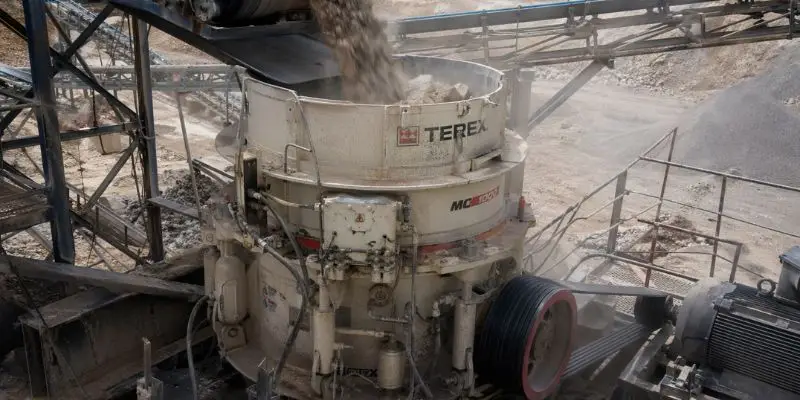
The crushing chamber is where the most recoverable performance typically lives. A chamber that was originally selected for a different feed size, or one that’s been run past its useful wear profile, can quietly bleed tons without triggering any alarms.
A few things worth evaluating:
- Whether your current liner profile still matches your actual feed gradation
- Whether you’re consistently achieving a choke-fed condition
- How much your product size distribution has drifted from target
- Whether wear is happening evenly or showing signs of localized stress
Site-specific liner analysis can quantify exactly how much performance you’re leaving on the table before you commit to a liner change. That data matters because not every chamber issue requires a new liner design. Some just require an operating adjustment.
Feed Conditions Matter More Than Most Teams Realize
Inconsistent feed is one of the most underestimated drivers of poor crusher performance, and it’s one of the hardest to see from the control room. Segregated feed, fines buildup in the feed hopper, or intermittent surge feeding all create uneven loading in the chamber. That uneven loading accelerates liner wear in specific zones, reduces throughput, and increases mechanical stress across the machine.
If your liner wear pattern is uneven, inconsistent feed conditions are usually the first thing worth investigating. The fix is often upstream from the crusher itself.
How Operating Parameters Affect Output Over Time
Closed side setting drift is another area where throughput quietly erodes. As liners wear, the effective CSS changes. If your team isn’t adjusting regularly to compensate, you’re probably running a tighter gap than you think, which increases fines generation and reduces throughput without any visible indicator.
Tracking power draw alongside CSS and product size gives you a much clearer picture of where the crusher actually is in its performance cycle. Teams that monitor these together can reduce crusher downtime by catching efficiency losses early rather than reacting after a liner failure.
Expert Insight: The Metric Most Sites Aren’t Tracking
Here’s something that doesn’t come up often enough in basic crusher performance discussions: tons per hour is a useful metric, but tons per hour per unit of wear life is a better one.
A liner that runs 10% longer but drops throughput 15% in its final weeks isn’t actually a win. You’re trading production for part life, and the math usually doesn’t favor it. The most optimized crushers we’ve worked with track throughput and power draw across the full liner life cycle, not just at the start of a fresh liner. That data tells you where the performance cliff actually is, and it lets you pull the liner before you’re on the back side of it.
Genuine crusher performance optimization at this level is site-specific work. It takes liner wear data, production records, and engineering context to build that picture for your operation. Most OEM guidance doesn’t go there, and that’s exactly the gap we fill.
Getting More Tons Without More Downtime
The path to better throughput usually doesn’t require more scheduled maintenance windows. It requires better data, the right liner profile, consistent feed conditions, and operating parameters that stay calibrated as the liner ages. When those four things are aligned, throughput improves and wear life often extends at the same time.
Crusher performance optimization doesn’t have to mean a major intervention. Sometimes it starts with a conversation about what your numbers are actually telling you. If your crusher’s output has been drifting and you’re not sure where to start, Optimum Crush’s engineering team is ready to dig in. Reach out and let’s take a look together.
FAQ
How do I improve cone crusher throughput without changing the liner? Start by auditing your feed conditions, CSS calibration, and choke feeding consistency. In many cases, throughput can be recovered through operating adjustments before a liner change is necessary. A site-specific wear analysis can confirm whether the liner profile is still appropriate for your current feed.
What causes a cone crusher to lose throughput over time? The most common causes are CSS drift as the liner wears, inconsistent or segregated feed, a chamber profile that no longer matches the feed gradation, and running the liner past its optimal performance window. These factors compound over time and are often more responsible for throughput loss than mechanical failure.
Can crusher performance optimization reduce unplanned downtime? Yes. When teams track power draw, CSS, and product gradation consistently, they can identify performance degradation before it becomes a failure event. That shift from reactive to proactive maintenance is one of the most reliable ways to reduce crusher downtime across a site.
How often should cone crusher operating parameters be reviewed? At minimum, CSS should be verified at every liner change and checked periodically between changes. Power draw and product size should be monitored continuously. High-volume operations benefit from a formal performance review every few weeks to catch drift before it affects production targets.
 Spanish
  English
  French