

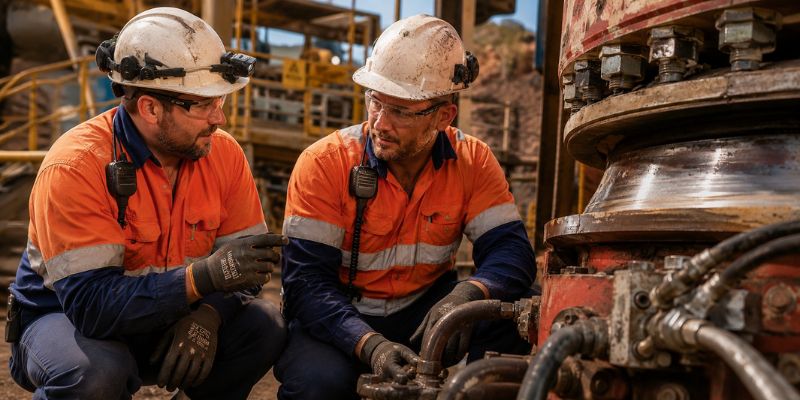
The distance between a mine maintenance team with an urgent crusher question and a crusher engineer who can answer it specifically and immediately is one of the most underestimated cost drivers in mining operations. In most support models, that distance is measured in layers, hold times, and callbacks. It doesn’t have to be.
Fractional crusher engineering built around direct expert access replaces that layered model with something more direct: a dedicated engineering relationship where the person your maintenance lead reaches when they call is the engineer who knows your machine, knows your site, and can provide specific guidance immediately rather than gathering information to pass up a chain. For operations where crusher downtime is expensive and engineering questions don’t wait for business hours, that directness changes what’s operationally possible.
Why Layers Between You and Engineering Expertise Cost More Than They Seem
The cost of a layered support model isn’t visible on any single invoice. It’s distributed across dozens of interactions throughout the year, each one adding friction, time, and imprecision to situations where speed and specificity would have produced better outcomes.
A typical layered support interaction looks like this. The maintenance team identifies a problem and contacts their account representative. The account representative gathers information and escalates to a technical support team. The technical support team provides guidance based on general knowledge of the equipment category or refers to documentation. If the question requires specialist engineering input, it escalates again to someone who may not be immediately available. The answer, when it arrives, is filtered through the layers it passed through and is frequently less specific than the original question required.
Each of those steps adds time. In a non-urgent situation, the cumulative delay is an inefficiency. In an urgent situation, each layer adds to the downtime duration. At operations where downtime costs tens of thousands of dollars per hour, the financial impact of that layered model materializes clearly when an urgent situation extends by the hours required to move a question through the chain to someone who can actually answer it.
The less visible cost is the quality degradation that happens as a question moves through layers. Each handoff loses context. The answer that emerges from the bottom of the chain is frequently a general response to a general version of a specific question, which is less useful than a specific answer from an engineer who understood the full context from the start.
What Direct Access to Fractional Crusher Engineering Actually Looks Like
Direct access to fractional crusher engineering means one thing operationally: when your maintenance lead calls with a crusher question, they reach a crusher engineer directly. Not an account manager. Not a general technical support line. The engineer who knows your specific crusher configuration, your ore conditions, your operating history, and the context of whatever they’re calling about.
That engineer is accessible during normal operating hours for routine questions and available around the clock through genuine 24/7 crusher support for urgent situations. They don’t need to be briefed on the basics of your operation every time contact is made because they’ve accumulated knowledge of your site through the ongoing relationship. And they can provide specific, actionable guidance based on that accumulated knowledge rather than general guidance based on standard equipment documentation.
In practice, direct access changes the texture of the support relationship in ways that are immediately apparent to the maintenance team. Questions get answered in the first conversation rather than through a series of follow-ups. Guidance is specific to the actual situation rather than generic to the equipment category. And the engineer on the other end understands the operational context well enough to ask the right clarifying questions rather than needing to be walked through the basics before getting to the substance.
The Operational Problems Direct Access Solves That Layered Support Can’t
There are specific operational problems that direct engineering access resolves consistently that a layered support model handles poorly regardless of how competent the people in it are.
Urgent diagnostic situations are the clearest example. When a cone crusher is exhibiting an unusual symptom during a production shift and the maintenance team needs to know whether to push through, reduce load, or stop for inspection, the answer has to come immediately and it has to be specific to the actual symptom and the specific machine. A layered model that takes hours to deliver a general answer is providing the wrong resource for the situation. Direct access to a crusher engineer who knows the machine and can engage immediately provides the right resource.
Complex troubleshooting situations that require back-and-forth dialogue are another. Some diagnostic processes require a conversation, where the engineer asks a question, the maintenance team answers, the engineer asks a follow-up based on the answer, and so on until the diagnosis emerges from the dialogue. That process is fast and effective when the engineer is directly accessible. It’s slow and imprecise when each exchange has to move through a layer before the follow-up question gets back to the person with the information.
Proactive operating decisions benefit from direct access in a different way. When a maintenance lead wants engineering input on a CSS adjustment, a feed condition concern, or a liner monitoring observation before it becomes a problem, direct access makes that conversation easy and fast enough to actually happen. In a layered model, the friction of going through account management for a non-urgent question means those conversations often don’t happen at all, and the issues they would have addressed early become problems addressed late.
How 24/7 Availability Changes the Value of Direct Engineering Access
Direct access to fractional crusher engineering during business hours is valuable. Direct access available around the clock through genuine 24/7 crusher support is significantly more valuable, because the situations where direct expert access matters most frequently don’t occur during business hours.
The 2am crusher stop. The unusual noise that starts during the night shift. The hydraulic pressure anomaly that the overnight operator notices and doesn’t know how to interpret. Each of those situations has a different outcome depending on whether the maintenance team can reach a knowledgeable engineer immediately or has to wait until morning for real engagement.
With genuine 24/7 crusher support and direct engineering access working together, the overnight operator who notices something unusual can reach the engineer who knows that machine within minutes. That engineer can evaluate the symptom based on their knowledge of the machine’s recent operating history, ask specific clarifying questions, and make a specific recommendation: continue operating and monitor, reduce load and investigate at shift change, or stop for immediate inspection. That recommendation, made by someone who knows the machine and has the full context, is worth significantly more than a general troubleshooting guide accessed through a support portal at 2am.
The combination of direct access and genuine around-the-clock availability creates a support model where the quality and speed of engineering engagement doesn’t degrade based on when the problem occurs. That consistency is one of the most operationally valuable characteristics a crusher support relationship can have at a mining operation running continuous or extended shifts.
Why the Relationship Model Matters as Much as the Knowledge
Here’s a perspective that experienced crusher engineers hold consistently and that doesn’t get enough attention in how mining teams evaluate support options: the knowledge an engineer brings to a support relationship is only half of what determines the quality of support delivered. The other half is how well the engineer knows the specific machine, site, and operating context they’re supporting.
Two engineers with identical crusher knowledge provide very different support quality depending on whether one has an established relationship with the site and one is engaging for the first time. The engineer with established context knows which questions to ask because they already know which answers matter for this specific operation. They can connect what they’re hearing to what they’ve observed before. They can identify when something represents a change from the machine’s normal behavior rather than a normal characteristic that would seem unusual to someone without that baseline.
Fractional crusher engineering built around an ongoing relationship accumulates that context over time. Each interaction adds to the engineer’s understanding of the machine, the site, and the operating patterns. Each liner cycle produces data that informs the next one. Each troubleshooting episode adds to the engineer’s mental model of how this specific crusher behaves under this site’s specific conditions.
That accumulated context is what separates a genuinely valuable ongoing engineering relationship from a series of disconnected support interactions with whoever happens to answer the phone. It’s also what makes direct access so much more valuable than layered access, because accumulated context lives with the engineer who built it, and direct access is what ensures the person with the context is the person who answers when the phone rings.
What to Look for When Evaluating a Direct Engineering Support Partner
A support partner offering genuine direct access to fractional crusher engineering should be able to demonstrate that model specifically rather than asserting it generally. Four things are worth evaluating directly before committing to the relationship.
Can they identify the specific engineer who would be your direct point of contact and describe their crusher engineering background? A genuine direct access model has a named engineer with specific qualifications, not a team that rotates based on availability.
What does their 24/7 crusher support actually look like outside business hours? Who answers, what’s their engineering background, and what scope of decisions can they make without escalating? The answers to those questions reveal whether the around-the-clock availability is genuine engineering access or answering service availability.
How do they build and maintain knowledge of your specific machine and site over the course of the relationship? A partner committed to genuine direct access has a process for accumulating and maintaining site-specific context rather than treating each interaction as a fresh start.
Can they point to specific examples of how direct engineering access resolved a situation faster or better than a layered support model would have? Real examples are more credible than structural descriptions of the model.
Fractional crusher engineering with genuine direct access and genuine 24/7 crusher support availability is the support model that matches the actual operating reality of a continuous mining operation. If your current support relationship puts layers between your maintenance team and the engineering expertise they need, Optimum Crush is built around removing those layers. Reach out and let’s talk about what direct engineering access looks like in practice for your operation.
 French
  English
  Spanish