
The invoice for a set of cone crusher liners is easy to see. The cost of liners that don’t fit your application correctly is a lot harder to find, but it’s usually bigger.
Poor liner fit is one of the most consistently underestimated problems in cone crusher operations. It doesn’t cause a dramatic failure. It just quietly erodes performance, accelerates wear, and adds mechanical stress across the machine until someone finally connects the dots. By that point, the cost has already been paid, in lost tons, shortened liner life, and unplanned interventions.
What Poor Liner Fit Actually Looks Like
When most people hear “liner fit,” they think about whether the liner physically seats correctly on the head or bowl. That matters, but it’s only one dimension of fit. A liner can seat perfectly and still be wrong for the application.
True liner fit covers four things: physical seating and contact, profile match to feed gradation, alloy match to ore hardness and abrasivity, and chamber geometry match to the required reduction ratio. A liner that gets any one of those wrong will underperform, even if everything else looks fine from the outside.
The tricky part is that poor cone crusher liners in the wrong application often look like they’re working. The crusher runs, tons move, and nothing breaks dramatically. The loss shows up in the numbers over time, not in a single event.
The Production Costs That Don’t Show Up on the Invoice
Here’s where the real financial impact lives. Poor liner fit affects production in ways that rarely get traced back to the liner itself:
- Reduced throughput per shift: A chamber profile that doesn’t match your feed gradation will consistently underdeliver on tons, often by 10 to 20 percent, without any obvious mechanical explanation.
- Increased fines generation: A liner with the wrong profile or worn past its effective geometry produces more fines than your circuit needs. That affects downstream processes and product quality.
- Shortened liner intervals: Liners that aren’t matched to the ore’s abrasivity wear faster than they should, which means more frequent changes, more downtime, and higher annual part spend.
- Higher power consumption per ton: When the chamber isn’t converting energy into breakage efficiently, the crusher draws more power to produce the same output. That cost is real but almost never attributed to liner selection.
Add those up across a full year and the gap between optimized cone crusher liners and poorly matched ones is often measured in hundreds of thousands of dollars at a large operation. Learn more about warning signs your chamber design is hurting performance.
How Poor Fit Accelerates Wear and Creates Bigger Problems
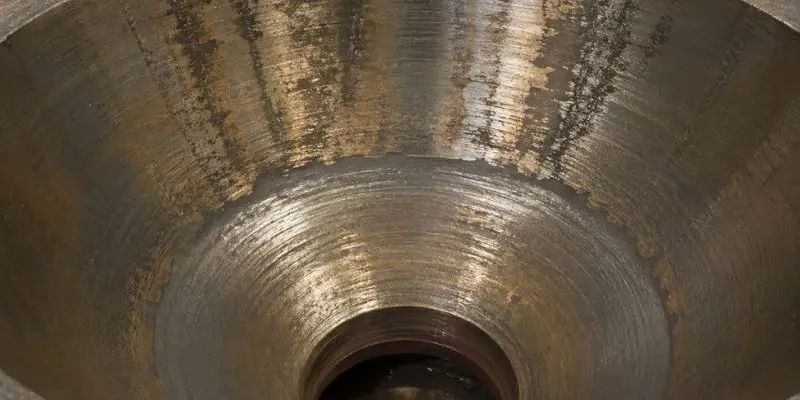
Beyond the production costs, poor liner fit creates mechanical consequences that compound over time. A liner that’s seating unevenly concentrates contact stress in localized zones rather than distributing it across the full seating surface. That stress accelerates wear in those zones and can damage the head or bowl itself if it goes unaddressed long enough.
Liners that aren’t matched to the feed can also cause the crusher to operate outside its intended load range more frequently. That means more pressure relief events, more stress on hydraulic systems, and more wear on components that weren’t designed to absorb that kind of loading. Crusher uptime improvement becomes much harder to achieve when the foundation, the liner fit, is working against you from the start.
Why Liner Fit Problems Get Misdiagnosed So Often
The reason poor liner fit stays hidden for so long is that its symptoms look like other problems. Short liner life gets blamed on ore hardness. Low throughput gets blamed on feed rate or CSS. High power draw gets blamed on material variability. Each diagnosis isn’t necessarily wrong, but it’s incomplete.
The diagnostic gap is that most teams evaluate liner performance in isolation rather than as part of a system. They measure wear and compare it to a spec. They don’t ask whether the spec was right for their application in the first place.
We’ve worked with sites that had been cycling through liners every six to eight weeks for years, attributing it to hard ore, when a profile adjustment and alloy review extended their interval to fourteen weeks. The ore didn’t change. The fit did.
How to Evaluate Whether Your Current Liners Are a Good Fit
A proper liner fit evaluation doesn’t require a major engineering engagement. It starts with a few straightforward questions:
- Were your current cone crusher liners selected based on your actual feed gradation and ore characterization data, or based on what the previous supplier recommended?
- Do your wear measurements at liner removal show even wear across the surface, or is wear concentrated in specific zones?
- Has your throughput per shift stayed consistent across the liner’s life, or does it drop off significantly before the liner is spent?
- Is your current liner interval meeting or exceeding expectations, or are you changing more frequently than planned?
If two or more of those questions point to a problem, a liner fit review is worth doing before your next change. The data you need is already on your site. It just needs to be looked at through the right lens.
Crusher uptime improvement starts with getting the fundamentals right, and cone crusher liner fit is one of the most fundamental variables in the system. If your numbers suggest something is off and you’re not sure where to look, Optimum Crush’s engineering team can help you work through it. Reach out and let’s take a look at what your liners are actually telling you.
FAQ
How do I know if my cone crusher liners are the right fit for my application? The clearest indicators are your wear pattern at liner removal, your throughput consistency across the liner’s life, and whether your liner intervals are meeting expectations. Uneven wear, declining throughput before the liner is spent, and shorter-than-expected intervals are all signs that the liner profile, alloy, or both may not be well matched to your specific application and ore characteristics.
Can the wrong cone crusher liner damage the machine itself? Yes. Liners that seat unevenly concentrate stress in localized zones on the head or bowl surface. Over time, that concentrated stress can cause damage to the seating surfaces themselves, which creates a more expensive repair than a liner replacement. Catching fit issues early is always less costly than addressing the downstream mechanical consequences.
What’s the difference between liner profile and liner alloy, and which matters more for fit? Profile refers to the geometry of the crushing chamber and controls how material moves through the crusher and how wear distributes across the liner surface. Alloy refers to the material hardness and wear resistance of the liner itself. Both affect fit, but they solve different problems. Profile fit determines throughput and wear distribution. Alloy fit determines how long the liner lasts in your specific ore. The best results come from optimizing both together based on your site data.
How often should cone crusher liner selection be reviewed? Any time you see a meaningful change in feed material characteristics, ore hardness, or production targets, liner selection is worth revisiting. Beyond that, a formal review after every two or three liner cycles helps ensure your current spec is still matched to your actual operating conditions, especially if feed gradation or reduction ratio requirements have shifted.
 French
  English
  Spanish