


A crusher parts supplier who works well for a quarry or an aggregate operation isn’t necessarily equipped to serve a large-scale gold mine. The equipment may be similar. The operating environment, the production pressure, and the consequences of getting it wrong are not.
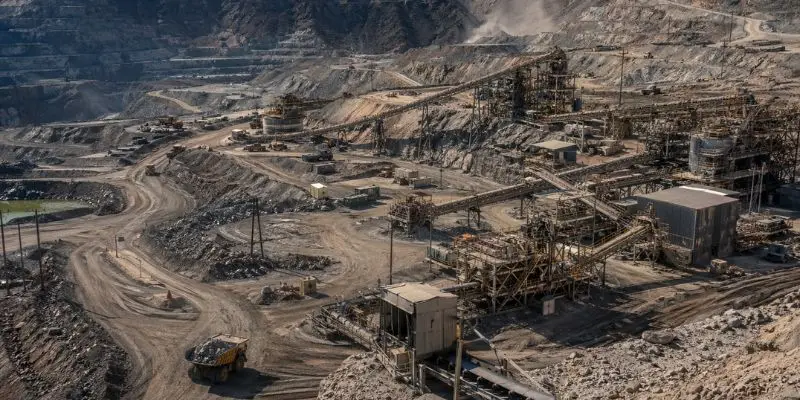
Gold mining operations run high-tonnage cone crushing circuits in some of the most demanding and logistically challenging environments in the industry. The mining crusher parts decisions made at those sites, what to source, from whom, and how to manage inventory and support, have a direct and measurable impact on production outcomes. Getting those decisions right requires a parts partner who understands the gold mining context specifically, not just the crusher hardware in general.
Why Gold Mining Operations Have Specific Crusher Parts Requirements
Large-scale gold mines share a set of operational characteristics that make their cone crusher parts requirements distinct from most other mining and aggregate applications.
Ore variability is one of the most significant. Gold ore bodies frequently change in hardness, abrasivity, and mineralogy as mining progresses through different zones. A liner profile and alloy combination that performed well six months ago may be underperforming today because the ore it’s processing has changed. Parts suppliers who don’t understand this dynamic tend to recommend static solutions that don’t keep pace with changing conditions.
Production continuity pressure is another. Gold mining operations are typically running against fixed production targets with significant financial consequences for shortfalls. Unplanned crusher downtime at a gold mine isn’t just an operational inconvenience. It’s a direct impact on revenue, on production schedules, and on the downstream processing circuit that depends on the crushing circuit to keep feeding it.
Finally, site remoteness creates logistical complexity that most parts suppliers underestimate. Many of the world’s major gold operations are located far from major supply centers, which means lead times, parts availability, and on-site support response all require more planning and more capability than a supplier serving urban or accessible sites needs to have.
The Four Things a Gold Mine Needs From a Crusher Parts Partner
-
Engineering Knowledge That Accounts for Ore Variability
A parts partner serving a gold operation needs to understand that liner selection isn’t a one-time decision. It’s an ongoing process that should be reviewed as ore characteristics change. That requires genuine engineering capability, not just a parts catalog, and a proactive relationship that keeps the liner spec current with the ore body rather than defaulting to whatever was ordered last time.
-
Stocked Inventory of Critical Components
At a remote gold operation, a parts supplier who can ship the same day from stocked inventory is a fundamentally different proposition than one who manufactures to order. The difference between a four-hour fix and a four-day wait often comes down to whether the right cone crusher parts were already on a shelf somewhere accessible. For gold mines where downtime cost per hour is high, that inventory commitment from a supplier is a direct risk management tool.
-
On-Site Support Capability
When a crusher problem at a remote gold mine requires physical inspection or hands-on troubleshooting, the ability to get an experienced engineer to the site matters. A supplier who can only support remotely is limited in what they can diagnose and resolve. Gold mining operations need a parts and engineering partner who’s willing and equipped to show up when the situation calls for it, regardless of where the site is.
-
Fast, Direct Communication
At a large gold operation, the maintenance lead dealing with a crusher problem at 3am doesn’t need to be routed through a sales team or a distributor to get a technical answer. Direct access to someone who knows the machine and can provide specific guidance immediately is one of the most practically valuable things a mining crusher parts partner can offer. Response time in an urgent situation is a direct input to downtime duration.
How Remote Site Logistics Affect Parts Strategy at Scale
Remote gold mine sites need a parts strategy that accounts for the time and cost of getting components to the site under both planned and emergency conditions. That strategy typically involves two layers working together.
The first is planned inventory: keeping a defined set of critical cone crusher parts on site based on failure probability and consequence. The parts worth holding on site aren’t always the most expensive ones. They’re the ones with the longest lead times from any supplier and the highest production consequence if they’re not available when needed.
The second is supplier inventory: partnering with a parts supplier who keeps common and critical components stocked and ready to ship immediately. For gold mines in remote locations, a supplier who can get a part on a plane the same day a need is identified is meaningfully different from one who needs to manufacture or source the component after the order is placed.
The combination of on-site critical spares and a supplier with stocked inventory creates a parts availability system that significantly reduces the duration and frequency of unplanned downtime events, which is exactly the outcome a high-production gold operation needs from its mining crusher parts strategy.
Why Gold Mine Crusher Parts Decisions Are High-Stakes in Both Directions
Here’s a perspective that doesn’t come up often enough in conversations about crusher parts at gold operations: the risk of underinvesting in parts quality and engineering is just as real as the risk of overspending on it, and the two risks are usually measured on very different timescales.
Overspending on parts is visible immediately. It shows up on the purchase order and gets scrutinized in the next budget review. Underinvesting in parts quality is invisible until it isn’t, and by the time it becomes visible, it’s usually in the form of a shortened liner interval, a throughput gap that’s been quietly compounding for months, or an unplanned shutdown during a critical production period.
The gold mines that manage their crushing circuit costs most effectively aren’t the ones spending the least on cone crusher parts. They’re the ones measuring cost per ton rather than cost per part, and they’re partnering with suppliers who can help them optimize that metric rather than just compete on invoice price.
At a gold operation running a high-horsepower cone crusher at full production, the difference between an optimized liner spec and a generic one is often worth more per year than the entire annual parts budget for that machine. That’s the scale of the opportunity, and it’s why parts decisions at gold mines deserve more engineering attention than most purchasing processes give them.
What to Look for When Evaluating a Parts Partner for Your Gold Operation
A parts partner genuinely equipped to serve a large-scale gold mining operation should be able to demonstrate four things specifically:
- Engineering capability tied to your ore body and operating conditions, not just dimensional compatibility with your machine
- Stocked inventory of the cone crusher parts most critical to your specific crusher model and configuration
- On-site support capability with a realistic response commitment for your site location
- A track record with comparable gold mining operations, with performance data that goes beyond testimonials to actual documented outcomes
If a supplier can demonstrate all four with specifics rather than generalities, they’re worth a serious conversation. If they can’t, they’re probably better suited to a less demanding application than a large-scale gold operation.
Mining crusher parts decisions at gold mines carry real financial weight in both directions. The right partner makes them easier, faster, and more consistently right. If you’re evaluating your current parts strategy or looking for a supplier who truly understands the gold mining environment, Optimum Crush’s team is ready to have that conversation. Reach out and let’s start with your specific operation.
FAQ
What cone crusher parts are most critical to keep in stock at a remote gold mine? The parts worth prioritizing for on-site inventory are those with the longest lead times from any supplier combined with the highest production consequence if unavailable. For most cone crusher configurations at gold mines, that typically includes mantles and bowl liners at various wear stages, critical hydraulic components, seal kits, and any components with known wear rates that can be predicted from operational data. A site-specific critical spares review with your engineering partner is the most reliable way to build that list for your specific machine and location.
How does ore variability at gold mines affect cone crusher liner selection? Gold ore bodies frequently change in hardness, abrasivity, and mineralogy as mining progresses. Those changes affect how quickly liners wear, where wear concentrates on the liner surface, and how well the current liner profile matches the feed material entering the crusher. A liner spec that was optimized six months ago may be underperforming today if the ore characteristics have shifted. Regular liner wear reviews that account for ore body changes are essential for maintaining optimized performance at gold operations with variable ore.
What should I expect from on-site crusher support at a remote gold mine location? A capable parts and engineering partner should be willing to commit to on-site visits for troubleshooting, liner change support, and periodic performance reviews regardless of site remoteness. The logistics of getting to a remote site are the supplier’s problem to solve, not yours. What you should expect is a clear response time commitment, engineers who are experienced with your specific crusher model and configuration, and support that goes beyond observation to hands-on problem solving and specific recommendations tied to your site data.
How do I calculate whether better mining crusher parts are worth the investment at my gold operation? Start with your current cost per liner change event: the part cost plus the downtime cost valued at your site’s production rate. Multiply that by your annual number of liner changes. Then model what a 20 to 30 percent improvement in liner life would do to that total, accounting for both reduced part spend and fewer downtime events. At most large gold operations, that calculation produces a number that makes engineering-led liner optimization look very cost-effective compared to optimizing purely on unit price.
 Spanish
  English
  French