

Liner life on paper and liner life on your site are rarely the same number, and the gap between them is almost always explainable. The mines that consistently extend crusher liner life aren’t running a different machine or a different alloy. They’re working from better information.
That information comes from the site itself, and most of it is already being generated. The challenge is knowing which data points actually matter and what to do with them between liner changes.
Why Liner Life Varies So Much From Site to Site
Two mines running the same cone crusher model with the same liner spec can see dramatically different wear results. One operation gets 8 weeks out of a liner. Another gets 14. The machine is the same. The difference is everything around it.
Feed hardness, feed gradation, moisture content, choke feeding consistency, CSS management, and even the way material is delivered to the crusher all affect how quickly a liner wears. None of those variables show up in OEM liner life estimates because OEM estimates are based on standardized test conditions, not your ore body, your circuit, or your operating habits.
That’s why attempting to extend crusher liner life without site-specific data is essentially guesswork. You might get lucky, but you won’t know why, and you won’t be able to repeat it.
The Site Data That Actually Predicts Liner Performance
Not all data is equally useful. These four inputs have the highest impact on understanding and improving liner life:
- Feed gradation records: If your feed size distribution shifts, your liner profile may no longer match what’s actually entering the crusher. That mismatch accelerates wear in specific zones.
- Power draw history: Consistent power draw within the crusher’s optimal range indicates good chamber loading. Spikes or chronic high draw suggest the chamber is working harder than it should, which shortens liner life.
- CSS tracking over time: As liners wear, CSS drifts. Teams that track and adjust regularly maintain a more consistent crushing environment, which distributes wear more evenly across the liner surface.
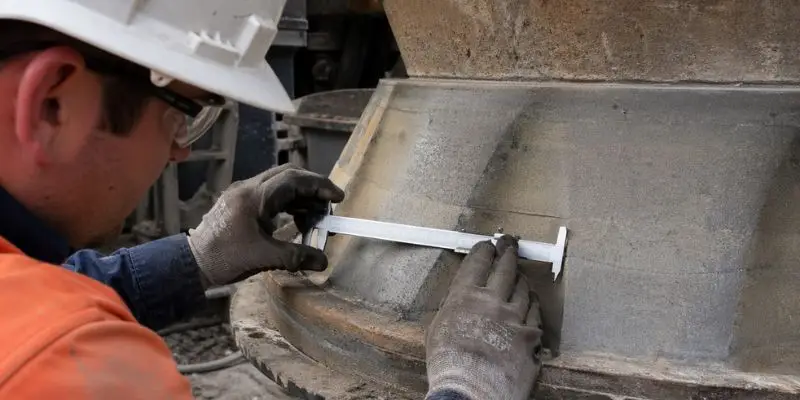
- Liner wear measurements at removal: Measuring wear depth at multiple points across the mantle and bowl liner at each change builds a wear profile that reveals whether loading is even or concentrated. That data drives better liner design decisions over time.
How Feed Conditions Drive Wear Faster Than Most Teams Expect
Feed conditions are the variable that gets the least attention and causes the most damage to liner life. Surge feeding, where the crusher goes from starved to flooded repeatedly, is particularly destructive. It creates impact loading in the chamber rather than steady compression, and impact loading chews through liners far faster than consistent choke feeding does.
Segregated feed is another common culprit. When coarser material consistently enters one side of the feed opening and finer material enters the other, wear becomes uneven across the liner face. That uneven wear shortens usable liner life even when total wear volume is still within range, because one zone fails before the rest of the liner is spent.
Fixing feed conditions is often the fastest and cheapest way to extend crusher liner life before any engineering changes are made.
Why OEM Liner Life Estimates Set Teams Up to Underperform
OEM liner life guidance is a starting point, and a rough one at that. It’s built on average conditions across a wide range of applications. When maintenance teams use OEM estimates as the benchmark, they’re measuring their performance against a figure that has little to do with their actual operating environment.
The more useful benchmark is your own historical data. What’s the best liner life you’ve achieved at your site, under what conditions, and with what operating parameters? That number is your real baseline. Once you have it, you can start identifying what changed during the runs that underperformed, and that’s where the real opportunity to extend crusher liner life lies.
We’ve seen sites recover two to four weeks of liner life simply by tightening up feed consistency and CSS management, without changing the liner spec at all. The engineering change came later, and it added even more. But the data had to come first.
What to Do With the Data Once You Have It
Collecting data is only useful if it informs decisions. Here’s a simple framework for turning site data into liner life improvements:
- Review wear measurements from the last two or three liner changes and look for patterns in where wear is concentrating
- Compare power draw history against CSS records to see whether the crusher was operating in its optimal range throughout the liner’s life
- Check feed gradation records against your liner profile spec to confirm the chamber is still matched to your current feed
- Bring that data to an engineering review before your next liner change, not after
That last point matters. Most liner decisions get made reactively, when the liner is already out and the shutdown clock is running. Making the decision proactively, with data in hand, gives you time to consider whether a profile adjustment or alloy change would improve results before you’re committed to the next run.
Extending crusher liner life is an ongoing process, not a one-time fix. The sites that do it best treat every liner change as a data collection opportunity and every data review as a chance to make the next run better.
If you’re not sure where to start or your data isn’t telling a clear story yet, Optimum Crush’s engineering team can help you build the picture. Reach out and let’s look at what your site data is already telling you.
FAQ
What’s the most common reason cone crusher liners wear out faster than expected? Inconsistent or poorly distributed feed is the most common culprit. Surge feeding, feed segregation, and running the crusher in a starved condition all create uneven or impact loading in the chamber, which accelerates wear significantly compared to consistent choke feeding. Feed conditions are usually worth addressing before any liner design changes are made.
How do I know if my liner profile is matched to my feed material? The clearest indicators are your wear pattern at liner removal and your throughput consistency over the liner’s life. If wear is concentrated in one zone or throughput drops off significantly before the liner is fully spent, the profile may not be well matched to your feed gradation or reduction ratio. A site-specific liner analysis can confirm this with measurement data.
Does CSS management really affect how long a liner lasts? Yes, significantly. As a liner wears, the effective CSS tightens. If teams don’t adjust to compensate, the crusher ends up running at a tighter gap than intended, which increases fines generation and puts additional stress on the liner and the machine. Regular CSS verification and adjustment is one of the simplest ways to extend crusher liner life without any hardware changes.
How much liner life improvement is realistic with better site data? It depends on how much variability exists in your current operation, but improvements of 15 to 40 percent are achievable in many cases when feed conditions, CSS management, and liner profile are all optimized together. The biggest gains typically come from sites that haven’t previously tracked or acted on wear data systematically.
 French
  English
  Spanish