
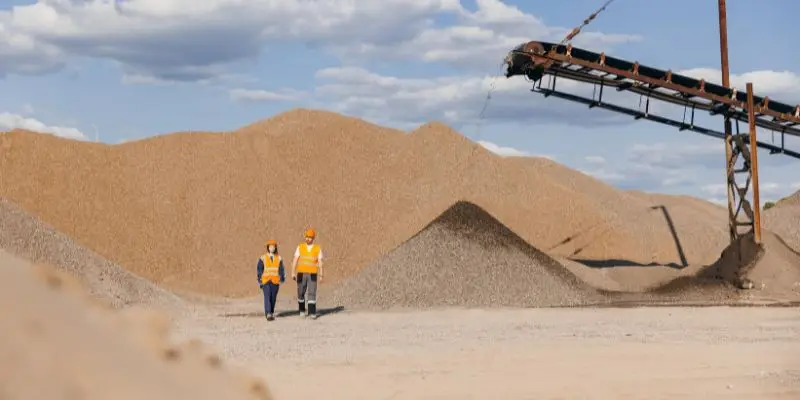
When your cone crusher goes down, your entire operation can grind to a halt. Whether you’re running a gold mine in Canada or a quarry in Australia, crusher troubleshooting isn’t just part of the job—it’s critical to keeping your team on track and your budget in line.
At Optimum Crush, we’ve honed our skills over years, tackling problems that OEMs struggle with. Here, we present some of the most common cone crusher issues, their root causes, and effective solutions.
1. Inconsistent or Fluctuating Power Draw
What’s happening:
You see irregular power usage, or your motor is drawing too much load.
Why it happens:
- Unstable feed
- Worn or uneven liners
- Blocked chamber
Fix it fast:
- Check for feed segregation
- Inspect liners with laser scanning
- Make sure the feed is well-distributed and consistent
- Evaluate your closed-side setting (CSS)
Pro Tip: We’ve seen a simple liner change improve stability and power draw by over 15%.
2. Excessive Wear on One Side of the Mantle
What’s happening:
Your mantle is wearing out unevenly—one side is toast while the other looks untouched.
Why it happens:
- Poor feed distribution
- Feed entering the chamber off-center
- Improper hopper design or setup
Fix it fast:
- Train loader operators on proper feeding techniques
- Add feed distribution plates if needed
- Use a camera or monitoring tool to assess the feed visually
When you let wear patterns go unchecked, you shorten the life of your parts and run up your costs.
3. Reduced Crusher Output
What’s happening:
You’re not hitting production targets. Tons per hour are down, and your operators are frustrated.
Why it happens:
- Worn liners
- Inefficient chamber profile
- Improper CSS settings
Fix it fast:
- Use liner scanning to check wear status
- Adjust or replace worn parts
- Evaluate the chamber profile and make sure it’s optimized for your material
Optimum Crush can help you engineer the right liner for your feed to increase throughput without sacrificing quality.
4. Frequent Liner Changes and Maintenance Downtime
What’s happening:
You feel like you’re constantly swapping liners or shutting down for crusher maintenance.
Why it happens:
- Poor liner fit
- Non-optimized material selection
- Generic or OEM liners not designed for your circuit
Fix it fast:
- Move to custom-engineered liners designed specifically for your machine and material
- Use laser scanning to plan changes more effectively
- Track wear over time with a performance report
Our liners typically last longer and perform better because we engineer them for your exact application, not a one-size-fits-all approach.
5. Crusher Overheating or Mechanical Failure
What’s happening:
Bearings are running hot. Components are failing too often.
Why it happens:
- Inadequate lubrication
- Contamination
- Running the crusher outside design limits
Fix it fast:
- Stick to a strict lubrication and maintenance schedule
- Monitor power draw and ensure you’re not overloading
- Work with our engineers to audit your crusher’s performance
We’ve helped operations cut major mechanical failures in half just by aligning operating conditions with realistic crusher performance limits.
Crusher Troubleshooting: Your Crusher Doesn’t Have to Be a Problem
Most cone crusher issues don’t come out of nowhere—they build up from ignored warning signs. The good news? Every problem has a fix, and most are preventable.
At Optimum Crush, our crusher optimization and troubleshooting services are built for speed, precision, and results. We bring:
- Field-proven expertise
- Custom-fit wear parts
- Laser scanning and liner reports
- On-site and remote technical support
If you find yourself in a constant battle with the same crusher problems, it’s a clear sign to bring in the experts. Optimum Crush offers the extensive experience and specialized services you need to tackle cone crusher issues effectively.
Let’s fix it—fast.
 English
  Spanish
  French