

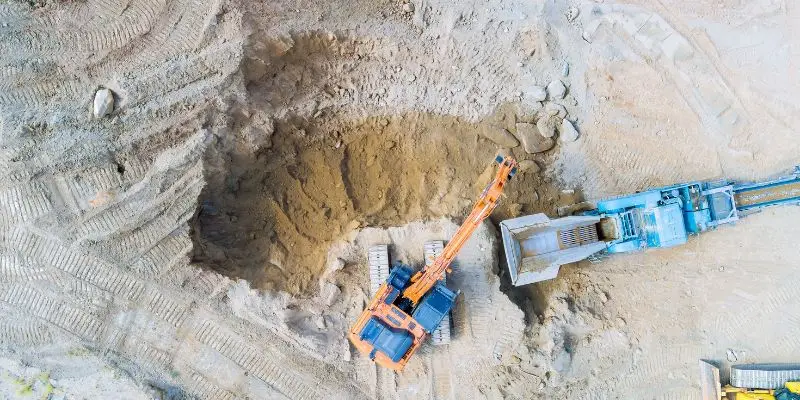
There’s a big difference between theory and field reality, especially when it comes to crusher optimization. You can run all the calculations you want, but you don’t know what works until you’ve stood next to a hot crusher mid-shift trying to make a deadline.
At Optimum Crush, we’ve done the fieldwork. We’ve helped crews troubleshoot real-world problems and keep their production on track when the pressure is on.
If your team is struggling with downtime, inefficiency, or just can’t get the output you’re expecting, here are field-tested methods for crusher troubleshooting and performance improvement that work.
1. Crusher Troubleshooting 101: Start With the Symptoms, Not the Specs
Most crusher troubleshooting starts by asking: “What does the manual say?”
We start by asking: “What’s happening in the field?”
Real-world signs of underperformance include:
- Fluctuating power draw
- Uneven liner wear
- Increasing recirculation
- Declining tons per hour
These aren’t just annoyances. They’re signals your machine needs better crusher optimization—and fast.
2. Analyze Liner Fit and Wear With Laser Scanning
You can’t optimize what you can’t see.
Our laser scanning tools let you map wear patterns and chamber volume changes with precision. That data gives you:
- Clear insights into wear rates
- Visibility into performance loss
- Evidence to justify liner changeouts or redesigns
If your crusher troubleshooting process doesn’t include liner scanning, you’re flying blind.
3. Upgrade to Custom Liners That Match Your Circuit
Too many operations run generic liners that “fit”—but don’t optimize.
Our engineered parts are built for your:
- Feed material
- Operating settings
- Reduction goals
The result is smoother flow, more consistent output, and crusher optimization, improving your bottom line.
4. Balance Your Feed Distribution
It’s simple: a poorly distributed feed leads to poor performance.
In the field, we’ve seen operations lose up to 15% efficiency from feed segregation.
Fixes include:
- Feed plate upgrades
- Operator training
- Real-time monitoring
If your crusher troubleshooting doesn’t include feed flow evaluation, you’re missing one of the most common root causes.
5. Crusher Optimization: Tighten Your CSS Strategy
The closed-side setting (CSS) isn’t “set it and forget it.” It should change with liner wear and feed conditions.
Dialing in CSS improves:
- Throughput
- Energy efficiency
- Reduction ratio
We help teams monitor and adjust CSS as part of ongoing crusher optimization, not just during shutdowns.
Real Problems Need Real-World Solutions
You don’t need more theory—you need a supplier who’s seen it, solved it, and stood in your boots.
At Optimum Crush, we bring real crusher troubleshooting and optimization experience to every client we serve. Our on-site support, custom-engineered parts, and data-driven tools aren’t just add-ons. They’re why our clients hit their goals faster.
Let’s optimize your crusher, your way. Contact us today.
 French
  English
  Spanish